

M & M Ropeways: Designing & Manufacturing World-Class Ropeway Systems in India
“Ropeways are becoming a national priority, and M & M Ropeways is well-positioned to deliver world-class systems designed and made in India.”
Tuneer Garga, Head of Marketing - M & M Ropeways
How are ropeways emerging as a viable solution for both passenger mobility and material transport in India?
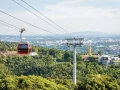
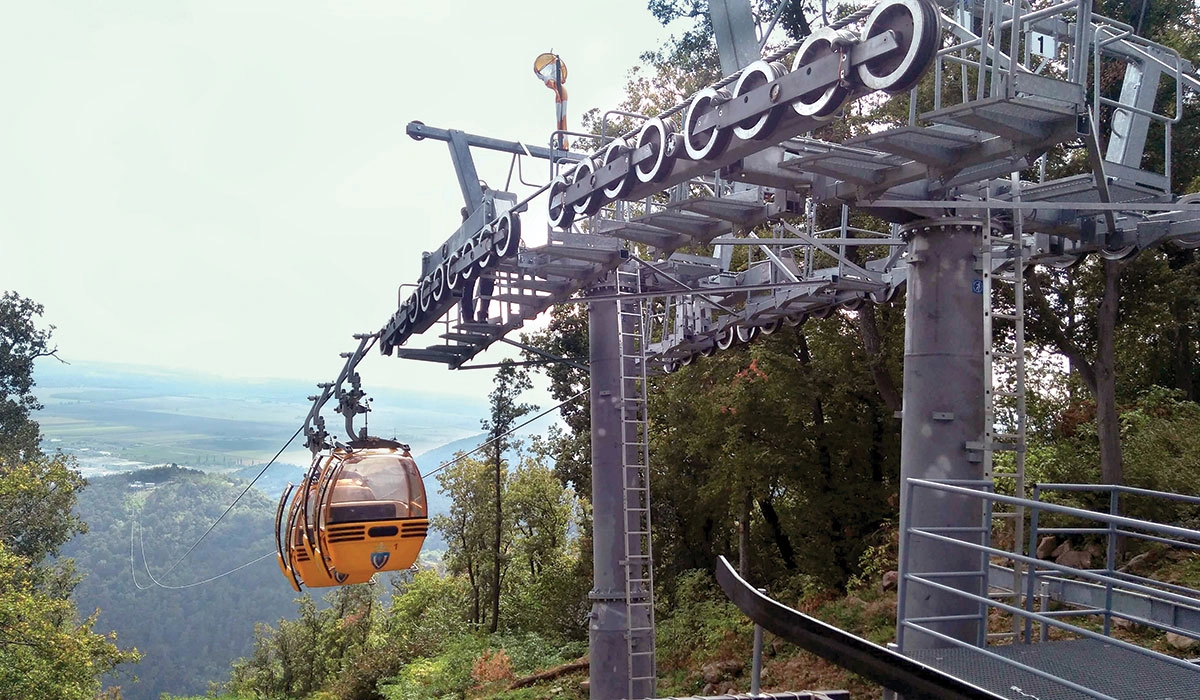
The use of aerial ropeways in India began in the 1960s–70s, mainly in hilly and remote regions. In recent years, they’ve evolved into a viable mode of public transport, supported by central and state governments for their speed, cost-effectiveness, and environmental benefits. More projects are now being planned, not just for last-mile connectivity in remote areas, but also to ease urban congestion, similar to the implementations seen in Western countries.
Material handling ropeways also hold strong potential in India due to the country’s varied terrain and growing industrial needs. They offer an efficient solution for transporting goods where conventional infrastructure is difficult or costly, especially in mining, cement, hydro power, and rural sectors. These systems can move agricultural and forest produce from rural areas to markets, supporting local economies.
Ropeways are quick to build, require minimal land, and offer flexible routing. With the right policy push and incentives, they can play a major role in strengthening India’s connectivity and industrial logistics.
What are the key challenges facing ropeway construction in India, despite the promising potential under government initiatives like Parvatmala Yojana?
The ropeway construction industry in India holds significant potential, especially with government support through schemes like the ‘Parvatmala Yojana’. However, it faces several key challenges. Land acquisition often gets delayed due to fragmented ownership, particularly in hilly or tribal regions. Environmental and forest clearances also take time, as many ropeway alignments pass through ecologically sensitive areas. Navigating approvals from multiple regulatory bodies, state, central, forest, and defense, adds to the delays.
Another challenge is the limited availability of a skilled workforce. There is a shortage of trained engineers, ropeway designers, and construction crews, and very few institutes in India offer specialized training in ropeway technology or operations. Construction in remote, mountainous, or forested regions presents its own set of logistical hurdles. Harsh weather conditions such as monsoons, landslides, and extreme temperatures can further delay construction or damage systems.
Public perception is also a barrier as ropeways are still largely viewed as niche or novelty transport rather than a mainstream mobility solution. There is limited understanding among policymakers, urban planners, and the general public regarding their efficiency and eco-friendliness.
The lack of comprehensive and uniformly enforced national standards for ropeway design and construction leads to inconsistent quality. As a result, developers often depend on foreign consultants and OEMs, which increases both cost and dependency. Lastly, coordination between stakeholders, such as state and central governments, forest departments, tourism boards, and private players, is often weak. Public-private partnership models are still evolving, and the lack of clear risk-sharing frameworks hinders greater private sector participation.
M & M Ropeways has executed a wide range of ropeway projects under extreme conditions and across diverse sectors. Please tell us more about the company’s capabilities in material and passenger ropeways, and highlight some of your most notable projects.
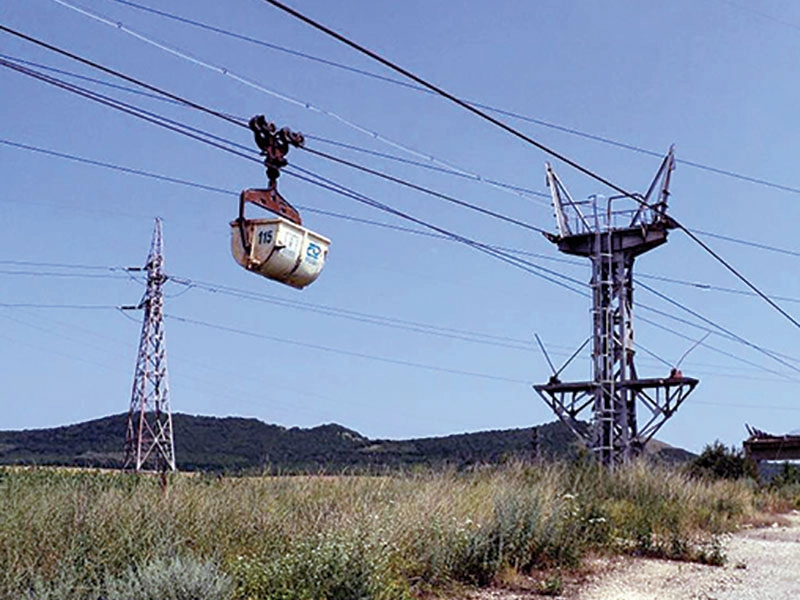
M & M Ropeways was incorporated with the intent to offer alternative transportation solutions that are viable, cost-effective, and eco-friendly for both passenger and material handling applications. Over the years, it has grown into one of India’s leading companies capable of designing, manufacturing, and installing aerial ropeways and cable cranes. The company has successfully delivered ropeway systems with single load capacities ranging from 100 kg to 10,000 kg and covering distances of up to 6,500 meters with a single drive.
The company has developed and installed ropeways across a wide range of sectors including hydropower projects, dam construction, tunneling, penstock laying, pipeline construction, cement plants, mining, rural connectivity, agricultural transport in mountainous terrain, and even tea estates. Among our most notable achievements is the installation of ropeway systems at altitudes as high as 18,000 feet in the Siachen Glacier for the Indian Army, where temperatures drop below -35°C. These are some of the most inhospitable conditions in the world.
For Passenger Ropeways, there are a few projects we are working upon in collaboration with our Slovakian partner, TatraLift, a globally recognized ropeway company with over 1,200 installations in countries like the Czech Republic, Poland, Germany, France, China, the UK, and South Korea.
How is M & M Ropeways supporting the 'Make in India' initiative and ensuring high standards in manufacturing and R&D for ropeway systems?
At M & M Ropeways, we strongly support the 'Make in India' initiative by developing, manufacturing, and assembling ropeway systems entirely in India. All our departments work in close coordination to ensure optimal outcomes across various functions. We have in-house capabilities to design, manufacture, and commission ropeway systems in compliance with ISO 14001:2015, ISO 9001:2015, and ISO 9000:2015 standards. Our superior technology and efficient organizational setup are tailored to deliver seamless operations, high productivity, and excellent service.
Our manufacturing facility spans 4800 square yards and is divided into multiple dedicated units to streamline execution. We use high-grade materials to meet market demands and ensure the highest quality standards in every installation. Our experienced R&D team leverages advanced software and tools to foster innovation, playing a crucial role in the continued success of M & M Ropeways.
How is M & M Ropeways leveraging international expertise and advanced technologies to enhance safety and efficiency in its ropeway systems?
Our detailed design calculations are carried out by our expert design engineers in Europe, strictly adhering to OITAF regulations and guidelines. OITAF serves as an international umbrella organization for ropeway operators, manufacturers, public authorities, and research institutions, with the goal of collaboratively shaping the technical, economic, and legal development of the ropeway sector.
In line with global advancements, we have adopted the concept of computerized autonomous operation in our ropeway systems. Studies of ropeway incidents indicate that human and organizational factors often contribute to accidents. Autonomous ropeways can operate without on-site personnel at stations, reducing such risks. These systems also meet case-specific requirements set by public authorities during the permitting process. When combined with the experience of trained operators, our smart, networked technology ensures the highest standards of safety and operational efficiency.
We also offer a range of advanced rescue systems to handle emergencies:
- Redundant or Backup Drive Systems such as diesel engines allow continued movement of cabins at reduced speeds during power failures.
- Rope-Based Evacuation Systems, including rope descent with harnesses or horizontal evacuation using zip lines or pulley systems, are deployed based on terrain conditions.
- Rescue Trolleys, which travel along the haul rope and enable crew members to access stalled cabins and assist in evacuations.
- Ground-Based Rescue Methods, like tower climbing or the use of elevated platforms and cranes, are used depending on accessibility and location.
With these integrated systems and safety-first design philosophy, M & M Ropeways is committed to setting new benchmarks in ropeway infrastructure.