

Global Capability Centers in India Drive Record Office Leasing, Projected to Hit 65 Million Sq. Ft. by 2027: Colliers

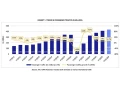
Since 2021, Global Capability Centers (GCCs) have leased nearly 100 million sq. ft. of office space across India’s top seven cities, fueling record-breaking transaction volumes. According to Colliers’ latest report, “GCCs in India: Building the Future of Global Enterprises,” released at the RICS CRE Conference in Bengaluru, leasing activity by global corporates is estimated to reach 28 million sq. ft. in 2025, nearly double the 2021 levels.
The share of GCCs in overall office leasing, which had dipped below 30% in 2022, has surged back to almost 40% in 2025. This momentum is expected to continue, with GCC leasing projected at 60–65 million sq. ft. during 2026–2027, reflecting a 15–20% increase over the previous two years.
“GCCs continue to remain the cornerstone of India’s office market, powering its ongoing scale-up. Capability centers in India are steadily evolving into innovation-driven, domain-specialized, and technologically integrated centers, and are likely to drive over 40% of India’s office space demand. In the next two years alone, GCCs are likely to lease 60-65 million square feet of Grade A space across the top 7 cities, —unlocking significant real estate opportunities, fueling demand for high-quality spaces, and cementing their role as the critical growth engine of India’s office market.” says Arpit Mehrotra, Managing Director, Office Services, Colliers India.
While the technology sector continues to lead GCC leasing with a 37% share, its demand has stabilized in recent years. Simultaneously, Technology GCCs are evolving from traditional support hubs into innovation-led centers, driving advancements in AI, data engineering, and product development for global enterprises. Interestingly, BFSI and engineering & manufacturing have expanded rapidly, with office space take-up rising 3-4X times between 2021 and 2025. In terms of contribution to overall GCC demand in India, share of BFSI has grown from 15% in 2021 to 27% in 2025, reflecting increasing footprint of global firms in the areas of risk management, compliance, digital banking, and fintech. Similarly, within GCCs, the share of engineering & manufacturing occupiers has risen from 11% to 17%, driven by growing R&D and product engineering needs. Healthcare and consulting companies have also expanded their GCC operations, further diversifying the demand base. Going forward, BFSI and engineering & manufacturing firms are together expected to account for over 40% of GCC space uptake, underscoring the ongoing demand transition from tech-led to a broad-based growth.
“GCCs will continue to anchor India’s office space demand, supporting the ongoing scale-up and diversification. While technology firms continue to drive Grade A space uptake by GCCs, the demand is becoming broader, with BFSI and engineering & manufacturing together expected to contribute 40–50% of leasing. Sustainability and flight-to-quality, meanwhile, remain central to occupier strategies, driving the preference for premium, future-ready spaces. Flex spaces too, are likely to gain traction as GCCs seek greater scalability and agility in their workplace portfolios. At the same time, Tier II cities are likely to see a steady uptick in GCC activity, supported by cost arbitrage, infrastructure development, and talent availability,” says Vimal Nadar, National Director & Head of Research, Colliers India.
Bengaluru and Hyderabad have established themselves as India’s leading GCC hubs, with more than 60 million square feet of GCC leasing since 2021. Both the cities cumulatively drove more than 60% of total GCC demand during 2021-2025 period. Meanwhile, Chennai is estimated to witness 5.3X surge in GCC leasing in 2025 compared to 2021 levels, highest among all cities. Owing to affordable rentals, especially in the peripheral locations, Chennai continues to attract cost-sensitive occupiers.
Notably, Bengaluru stands out as the premier hub not only for technology GCCs but also for global engineering & manufacturing firms. Mumbai, on the other hand, is favored by front-end BFSI players, while Pune attracts leading financial institutions, particularly for support service operations. In the east, Kolkata has become a natural choice for technology and consulting GCCs seeking a presence in that region.