

TCE Signs MoU with Arizona State University to Boost Semiconductor Workforce Development
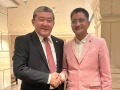
Tata Consulting Engineers Limited (TCE) has signed a Memorandum of Understanding (MoU) with Arizona State University (ASU), USA, to collaborate on critical and emerging technologies, starting with semiconductor workforce development.
The agreement, signed in New Delhi, marks a significant step towards strengthening India’s semiconductor ecosystem through global partnerships in education, training, and applied research.
The first initiative under this collaboration will be a joint learning and development programme by ASU’s Ira A. Fulton Schools of Engineering and TCE. The programme will offer technical professionals a comprehensive introduction to semiconductors, manufacturing processes, plant construction, and controlled environments.
Designed to address the growing need for skilled talent, the initiative will focus on semiconductor fabrication, cleanroom systems, contamination control, and sub-fab infrastructure. It will combine expert-led sessions with applied, industry-aligned projects to prepare engineers and professionals for future semiconductor facility development in India.
This partnership is a strategic step towards shaping India’s semiconductor future,” said Amit Sharma, Managing Director and CEO, Tata Consulting Engineers, and an alumnus of Arizona State University. “As a graduate of ASU’s mechanical engineering programme, it is a matter of pride to bring this world-class expertise into Tata Consulting Engineers’ ecosystem. Together, we aim to create benchmark semiconductor engineering capabilities, strengthen India’s journey in this critical sector, and contribute to global semiconductor resilience.”
ASU President Michael Crow stated, “We are delighted to work with Tata Consulting Engineers. This programme is the beginning of what we envision as a long-term collaboration to expand semiconductor workforce capacity and deliver solutions at scale. ASU is deeply committed to supporting India’s ambitions in building a sustainable semiconductor manufacturing ecosystem.”
The MoU follows ASU’s recent high-level delegation to India, led by President Crow, which engaged with policymakers, industry leaders, and institutions in Mumbai, Delhi, and Gandhinagar. Discussions with the India Semiconductor Mission and the Ministry of Electronics and Information Technology highlighted the importance of advanced skill-building collaborations to strengthen the sector.
India is making significant investments to establish itself as a global hub for semiconductors, with plans for fabrication plants, assembly and testing facilities, and advanced electronics manufacturing. These national initiatives are supported by partnerships such as this one, which focus on creating a strong talent pipeline and enabling engineering excellence.
The collaboration also aligns with the U.S.–India Initiative on Critical and Emerging Technology (iCET), a bilateral framework to deepen cooperation in semiconductors, quantum computing, artificial intelligence, and advanced telecommunications.
Dr. Kyle Squires, Senior Vice Provost of Engineering, Computing and Technology at ASU, said, “Our work with Tata Consulting Engineers is about building long-term capacity and trust that can fuel economic growth, advance technology, and create global impact. Together, we aim to prepare the next generation of engineers to drive semiconductor innovation.”
Dr. Michael Kozicki, Professor at ASU and programme lead, added, “Participants in this programme will not only gain technical knowledge but also learn how to foster a culture of innovation and quality that is essential to semiconductor success. Partnering with Tata Consulting Engineers allows us to connect academic insights with industry-ready applications.”